 sales@rajsuriindustries.com
 +91 9867293805
 Mon - Sat
10:00 - 7:00
Mon - Sat
10:00 - 7:00 
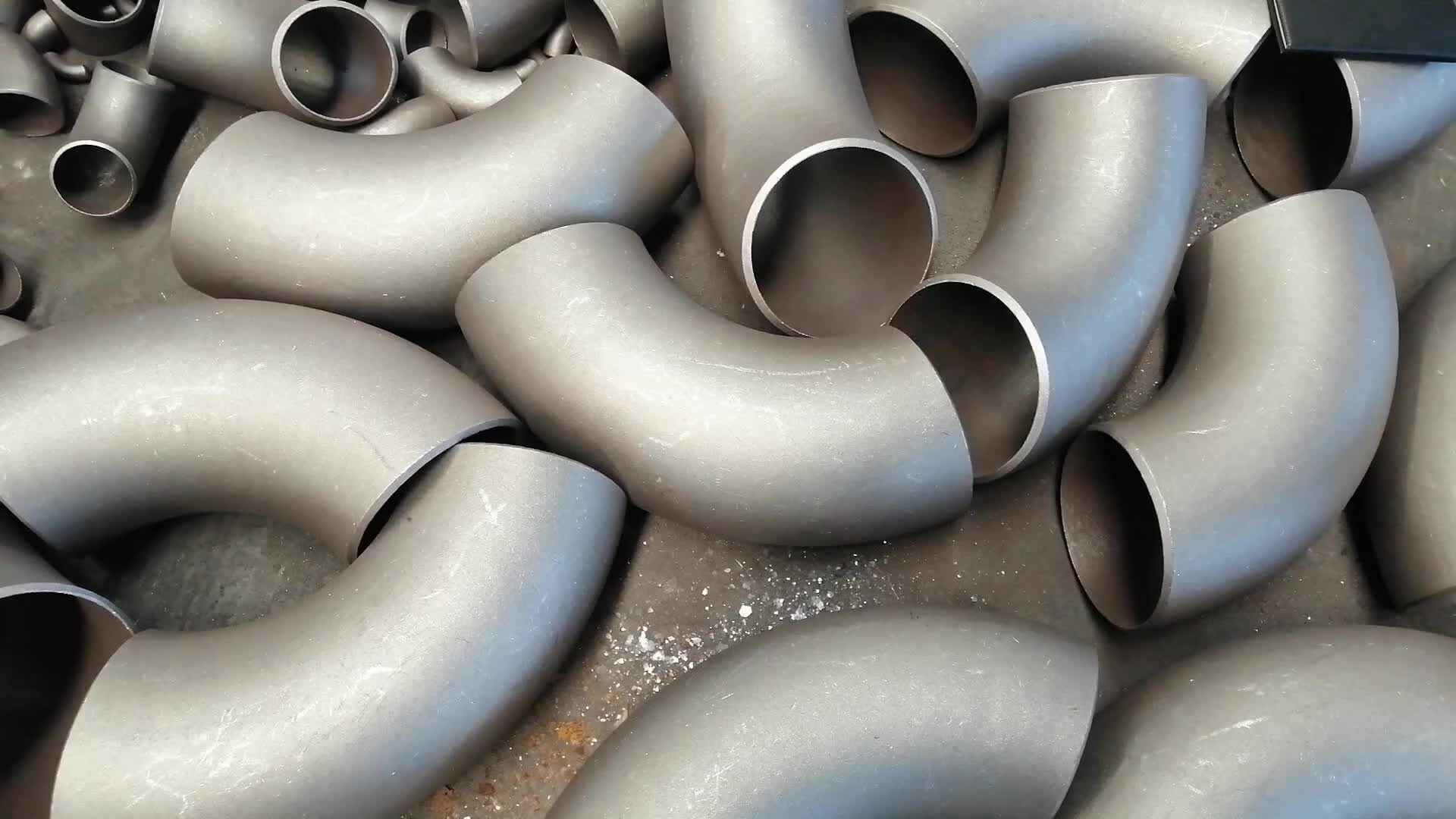
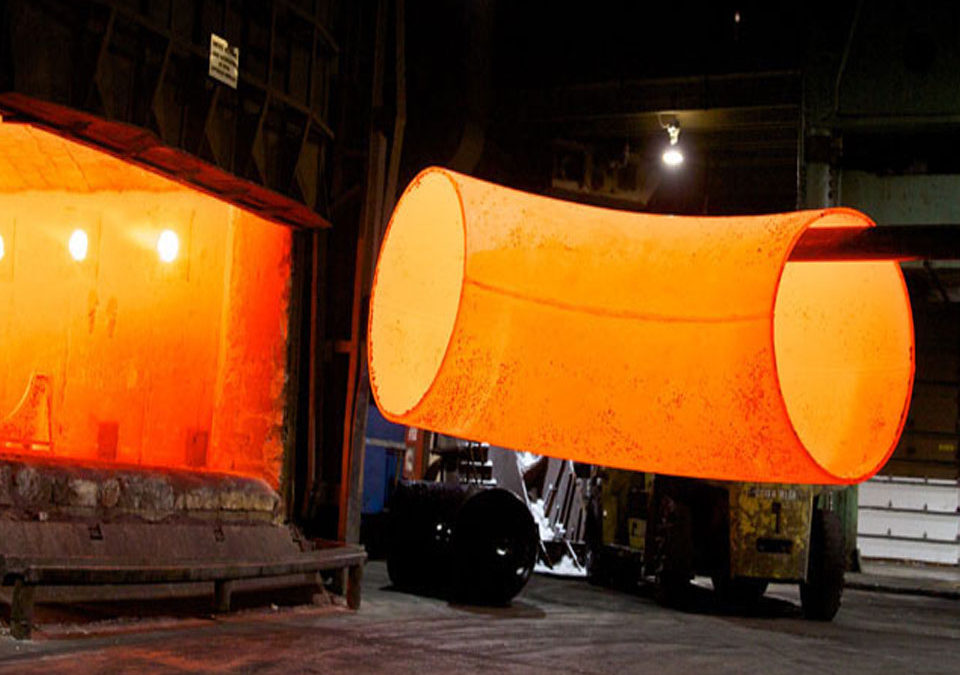
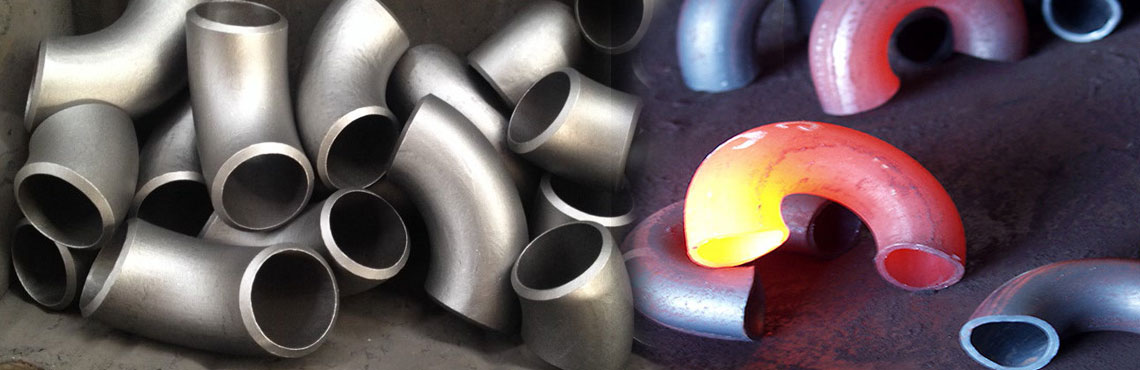
An elbow is a type of buttweld pipe fitting used to change the direction of flow in a pipeline. The most common types are 90-degree, 45-degree, and 180-degree elbows, which allow for various directional changes. Additionally, male and female elbows are used for specific joint connections. These fittings ensure smooth fluid flow and are commonly used in industries such as oil & gas, petrochemicals, and power plants.
Key Features of Buttweld Elbows:
Material Types:
Available in a variety of materials based on the application, including:
- Carbon Steel: Suitable for general applications in moderate conditions.
- Stainless Steel: Corrosion-resistant and used in harsh environments such as food processing or chemical industries.
- Alloy Steels: Used in high-temperature and high-pressure environments (e.g., power plants, oil refineries).
- Duplex Stainless Steel: Offers better strength and resistance to corrosion than standard stainless steel.
Types of Elbows:
- Long Radius Elbow (LR): Radius is 1.5 times the nominal pipe diameter (1.5D). Preferred for gradual directional changes with minimal flow resistance.
- Short Radius Elbow (SR): Radius is equal to the nominal pipe diameter (1D). Used in confined spaces but results in higher pressure loss due to sharper bends.
- Reducing Elbow: Used when connecting pipes of different diameters. Often employed when there is a need to reduce or change the pipe size along with the flow direction.
Angle Options:
- 45° Elbow: Ideal for moderate directional changes in flow.
- 90° Elbow: Used for right-angle turns in the system. Commonly used in industrial piping.
- 180° Elbow: Used for reversing the direction of flow (U-turn). Common in return loops and re-routing applications.
Welded Connection:
The elbow is welded directly to the pipe, making the joint stronger and leak-proof. This method is highly reliable for high-pressure and high-temperature systems.
Dimensional Standards:
Buttweld elbows are manufactured according to international standards to ensure compatibility across industries:
- ASME B16.9: Specifies the dimensions and tolerances for factory-made buttweld fittings.
- ASTM A234: Specifies the material used for carbon steel and alloy steel fittings.
- ISO 9001: Ensures quality control in the manufacturing process of elbows and other fittings.
Applications of Buttweld Elbows:
Buttweld elbows are used in various industries, including:
- Oil and Gas Industry: To connect pipelines in exploration, drilling, and transportation systems.
- Chemical Processing: For transporting chemicals and liquids safely in processing plants.
- Power Plants: In steam and fluid systems under high temperature and pressure.
- Water Treatment Plants: To control and direct water flow efficiently in treatment and filtration systems.
Benefits of Buttweld Elbows:
- Strong and Leak-proof: The welded connection ensures a high-strength, leak-proof joint that’s durable under extreme conditions.
- Durability: These fittings are corrosion-resistant and can withstand high pressures, temperatures, and harsh chemicals.
- Reduced Pressure Drop: The use of long-radius elbows helps to reduce turbulence and friction, thus minimizing the pressure drop in the system.
- Customization: Buttweld elbows can be custom-made to fit any specific angle or radius, providing flexibility in design.
Specification
| Elbow Type | Radius (R) | Pipe Diameter (D) | Application | Standard |
|---|---|---|---|---|
| Long Radius Elbow | 1.5D | Standard Sizes (1/2" to 72") | Used for smooth directional change in high-flow systems | ASME B16.9 |
| Short Radius Elbow | 1D | Standard Sizes (1/2" to 48") | Used in confined spaces with sharp directional change | ASME B16.9 |
| Reducing Elbow | Varies | Different Sizes | Used to connect pipes of different diameters | ASTM A234 |
Grades of Elbows
| Material Grade | Standard | Common Use | Temperature Range | Strength Characteristics |
|---|---|---|---|---|
| A234 WPB | ASTM A234 | General-purpose carbon steel | Up to 450°C (842°F) | Good strength and toughness |
| A234 WPC | ASTM A234 | Low-temperature applications | Up to 425°C (798°F) | Moderate strength, better for low-temp |
| A234 WPL6 | ASTM A234 | High-temperature, low-alloy | Up to 540°C (1000°F) | High strength at elevated temps |
| 304 | ASTM A312 | General-purpose stainless steel | Up to 870°C (1600°F) | Excellent corrosion resistance |
| 316 | ASTM A312 | Corrosive environments | Up to 870°C (1600°F) | Better corrosion resistance than 304 |
| 317L | ASTM A312 | Aggressive chemical environments | Up to 870°C (1600°F) | Superior corrosion resistance |
| P5 | ASTM A234 | High-temperature alloy steel | Up to 540°C (1000°F) | High strength in high-temperature environments |
| P11 | ASTM A234 | High-pressure and high-temp | Up to 575°C (1065°F) | Enhanced strength |
| P22 | ASTM A234 | High-temp and high-pressure | Up to 600°C (1112°F) | Excellent strength at high temps |
| P91 | ASTM A234 | Ultra-high pressure/temp | Up to 650°C (1202°F) | Exceptional high-temperature strength |
| 2205 | ASTM A790 | Seawater and offshore services | Up to 300°C (572°F) | High resistance to corrosion |
| 2507 | ASTM A790 | Super duplex, aggressive environments | Up to 300°C (572°F) | Excellent resistance to stress corrosion |